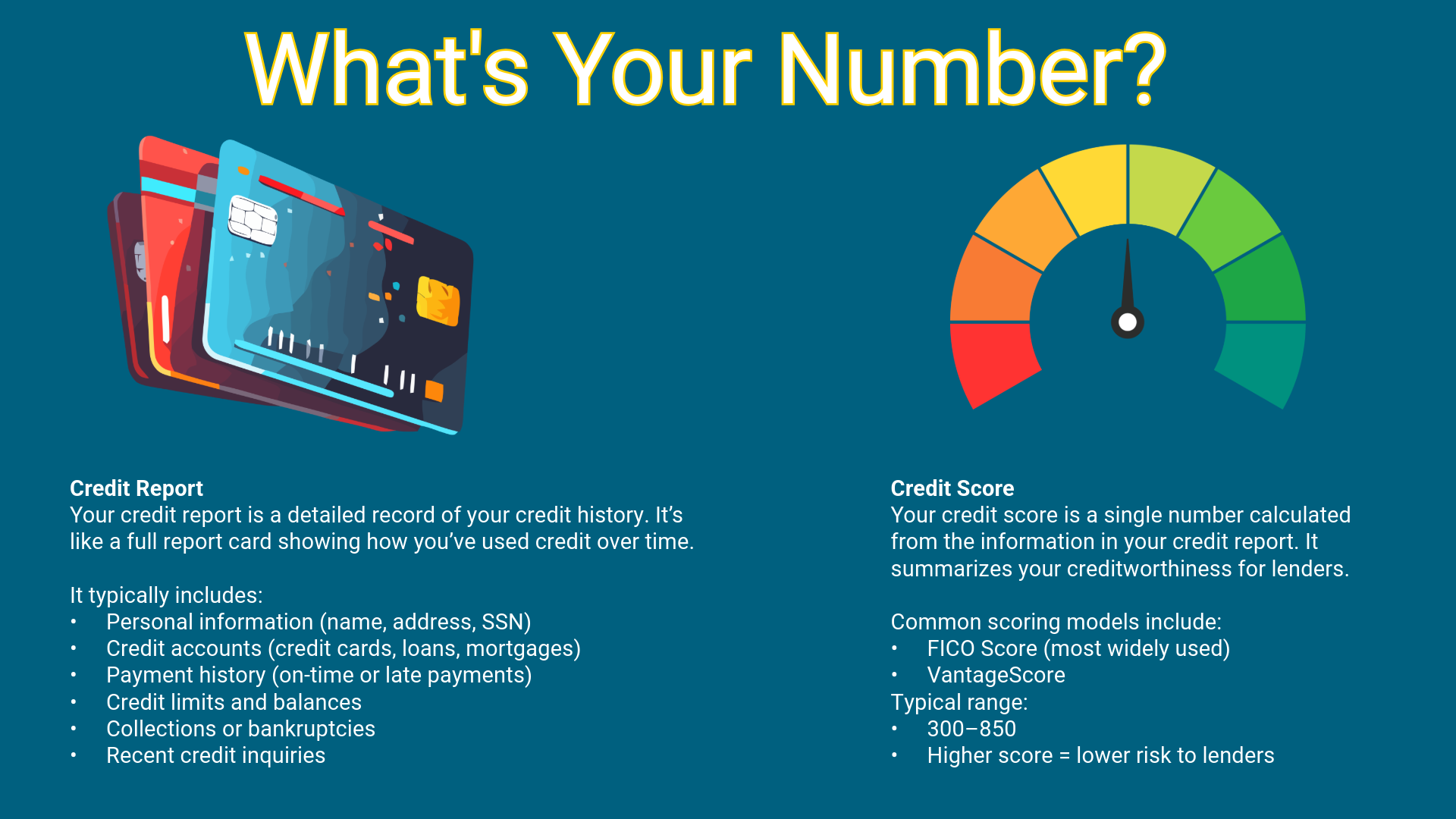
A credit score and a credit report are related but different parts of your financial profile. Read on to learn the difference.
Credit Report
Your credit report is a detailed record of your credit history. It’s like a full report card showing how you’ve used credit over time.
It typically includes:
- Personal information (name, address, SSN)
- Credit accounts (credit cards, loans, mortgages)
- Payment history (on-time or late payments)
- Credit limits and balances
- Collections or bankruptcies
- Recent credit inquiries
In the U.S., the credit bureaus that compile these reports are:
- Equifax
- Experian
- TransUnion
You can check your reports for free through the official site run by the bureaus:
AnnualCreditReport.com.
Credit Score
Your credit score is a single number calculated from the information in your credit report. It summarizes your creditworthiness for lenders.
Common scoring models include:
- FICO Score (most widely used)
- VantageScore
Typical range:
- 300–850
- Higher score = lower risk to lenders
Factors affecting your score:
- Payment history
- Amount of debt
- Length of credit history
- Credit mix
- New credit inquiries
Simple Way to Think About It
- Credit report = the full history and details
- Credit score = the summary number based on that history
Example: A lender might pull your credit report from Experian and then look at your FICO Score to quickly judge your credit risk.
Tip: It’s incredibly important to check your credit report at least once a year to make sure there are no errors that could lower your score.