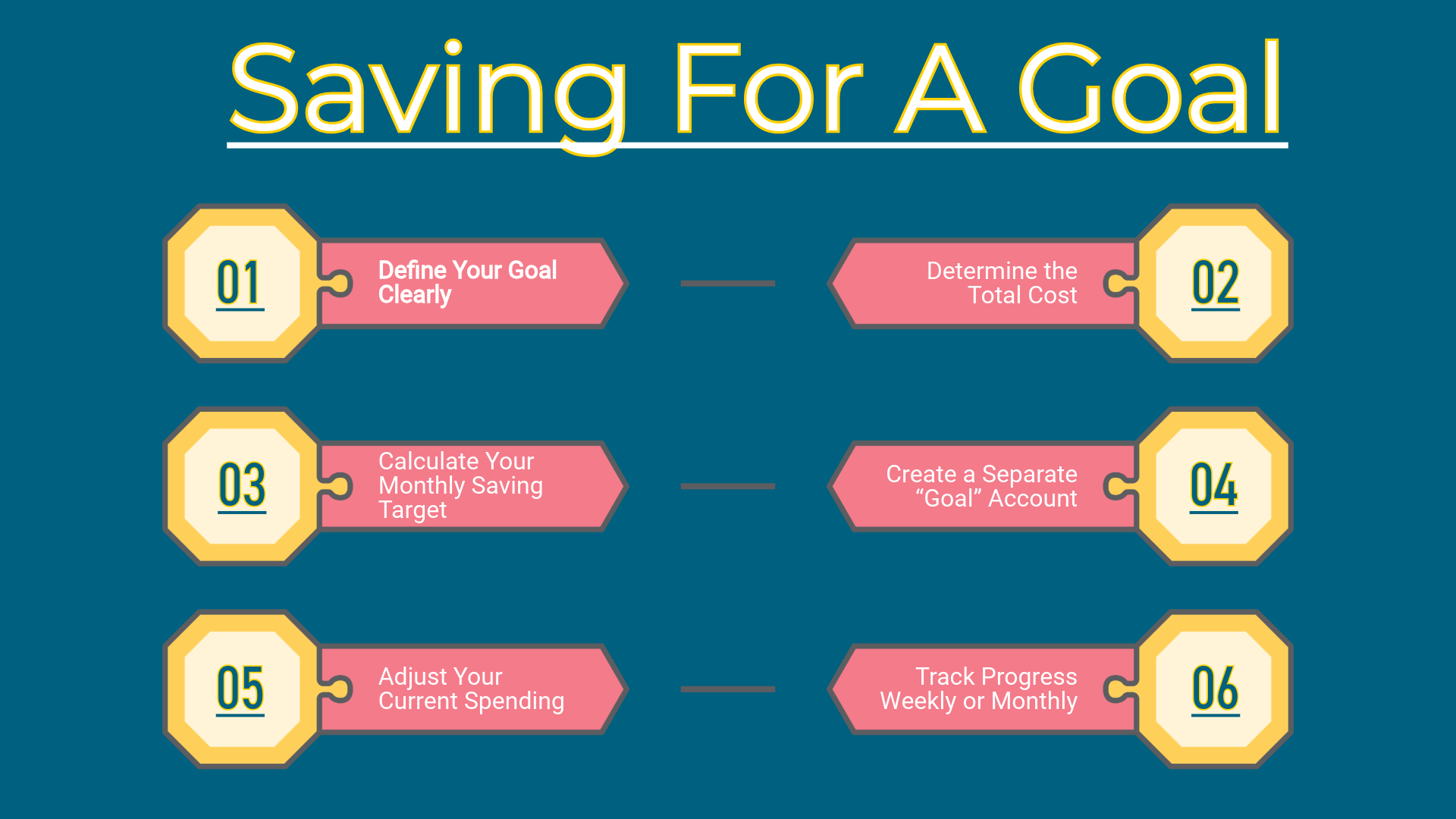
Have your eye on an ambitious savings goal – a trip to Italy? A wedding? Here are the steps that will get you there.
Define Your Goal Clearly
Ask yourself:
- What do I want? (Example: 10-day Italy trip.)
- When do I want it? (Example: Next June.)
- Why does it matter? (Motivation keeps you disciplined.)
A goal that is specific and time-bound is easier to plan for.
Determine the Total Cost
Break the goal into parts.
Vacation Wedding Example:
-
Flights
- Hotel
- Catering
- Activities
- Transportation
Add a buffer (typically 10–15%) for unexpected expenses.
Example: Vacation Wedding Budget Plan Summary
- Flights: $1,800
- Hotel: $2,200
- Catering: $1,200
- Activities: $1,000
- Transportation: $500
- Buffer (10%): $670
Total: $7,370
Calculate Your Monthly Saving Target
For example:
- Goal = $7,370
- Time = 18 months
➡ Monthly savings needed = $7,370 ÷ 18 = $410/month
Tip: The longer the timeline, the lower your monthly savings need to be.
Create a Separate “Goal” Account
This helps your brain — and your budget — treat the money as unavailable.
Possible options:
- High-yield savings account (for short-term goals)
- Money market account
- Envelope method (cash, for small goals)
Automate transfers on payday if possible — “set it and forget it.”
Adjust Your Current Spending
If the monthly target is too high, ask:
Can you:
- Reduce subscription services?
- Eat out less often?
- Skip the daily takeout coffee?
- Limit impulse purchases?
- Pause other optional goals temporarily?
Or:
- Extend your timeline instead.
Track Progress Weekly or Monthly
Tools that help:
- A spreadsheet
- Budgeting apps
- Paper envelope system
- Calendar reminders
Motivation strategy:
- Track % completed
- Celebrate milestones (without undoing savings)
Revisit the Plan When Life Changes
Adjust if:
- Income changes
- You get unexpected money (bonus, tax refund)
- Prices for your goal change
Windfalls:
-
Put at least part toward the goal immediately.