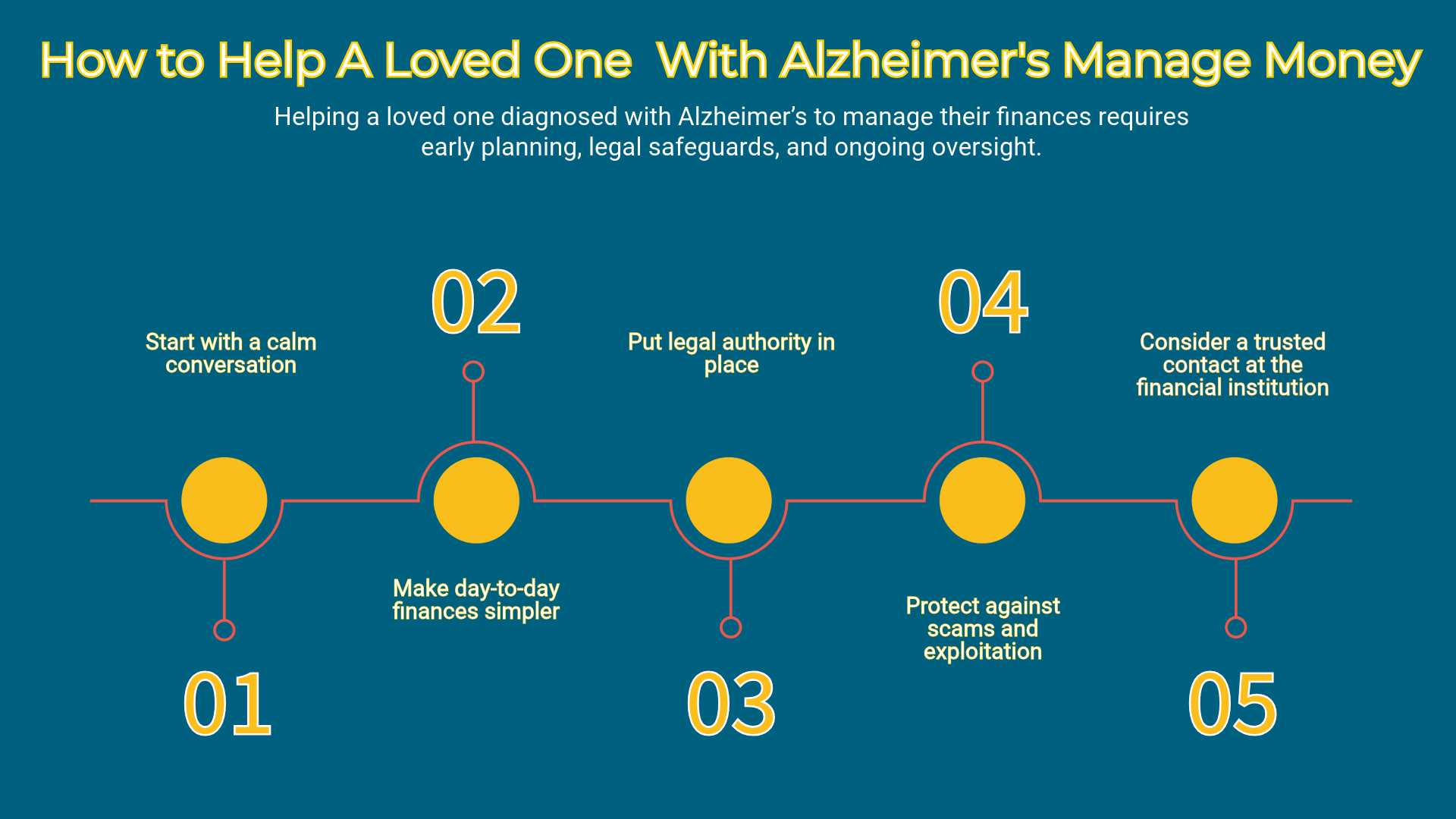
Helping a loved one with Alzheimer’s manage money is usually easiest when you increase support gradually while preserving as much independence as possible.
Start with a calm conversation
If they still understand their finances and can make decisions, involve them in the process rather than abruptly taking over. Explain that you're helping with organization and protection—not taking away control. The Alzheimer's Association recommends doing legal and financial planning as early as possible, while the person can still understand and participate.
Make day-to-day finances simpler
- Set up automatic payments for recurring bills such as rent, mortgage, utilities, and insurance.
- Create a simple monthly spending budget.
- Reduce unnecessary credit/debit cards or lower spending limits if appropriate.
- Consider giving them a manageable amount of cash for everyday purchases.
- Review bank and credit-card statements regularly for unusual activity. The National Institute on Aging specifically recommends monthly review as dementia progresses.
- Keep a secure list of accounts, recurring bills, insurance policies, debts, investments, and important contacts.
Put legal authority in place
If they are still capable of understanding what they're signing, consider speaking with an elder-law or estate-planning attorney about a durable financial power of attorney. This can authorize a trusted person to manage finances if the person later becomes unable to do so. Laws and requirements vary by state.
If they can no longer understand or consent to a financial power of attorney, don't try to have them sign one anyway. Depending on the circumstances, guardianship/conservatorship or another legal arrangement may be necessary; an attorney can explain the options.
Protect against scams and exploitation
People experiencing cognitive decline can become particularly vulnerable to financial exploitation. Watch for:
- Unusual withdrawals or transfers
- Repeated or duplicate payments
- New people becoming unusually involved in their finances
- Large or unexplained purchases
- Sudden changes to investments or beneficiaries
- Requests from callers, texts, or emails for passwords, Social Security numbers, or payment
A trusted contact can sometimes be added to financial accounts so the institution can contact that person if it detects potential exploitation, without giving the trusted contact access to the money.
If you become the financial caregiver
If you have legal authority to manage their money, treat it as their money, not yours. A fiduciary generally has duties to act in their best interest, keep their finances separate from yours, manage assets carefully, and maintain good records.
Keep receipts and transaction records, avoid mixing accounts, and document significant financial decisions. The CFPB has a particularly useful set of free guides for people managing someone else's money.
CFPB: Managing Someone Else’s Money guides: Guides for managing someone else’s money | Consumer Financial Protection Bureau
One important principle: don't wait until there's a financial crisis to address this. If your loved one is still able to participate in decisions, this is generally the best time to establish safeguards and clarify who they want to help them.