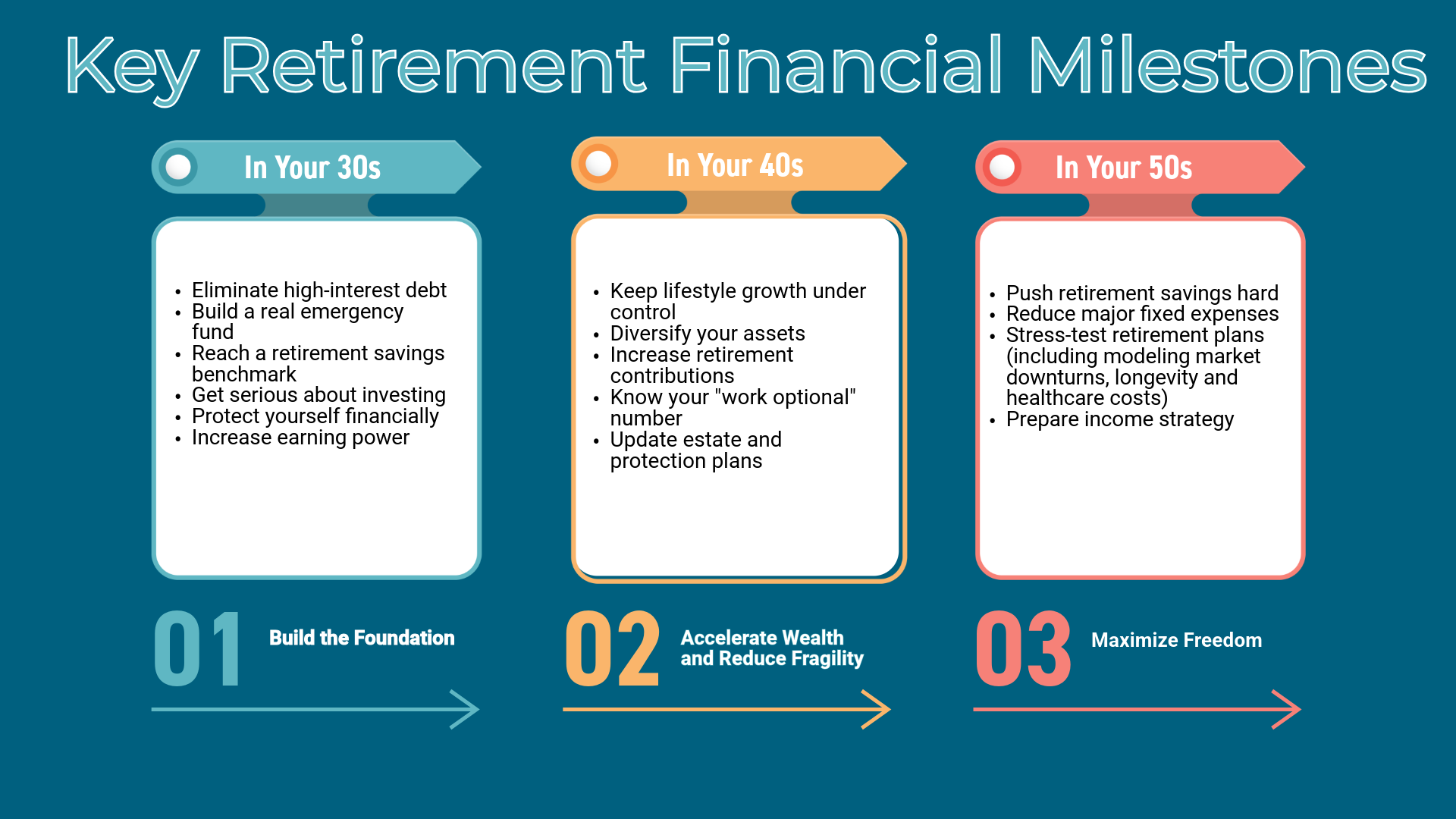
A useful way to think about financial milestones is by decade: each stage shifts from building stability to increasing optionality to preserving freedom. The exact numbers depend on income, family situation, and cost of living, but these are strong benchmarks to aim toward.
Your 30s: Build the Foundation
Eliminate high-interest debt
Priority debts:
- Credit cards
- Payday/personal loans
- High-rate private student loans
A mortgage or low-rate federal student loans are usually less urgent.
Build a real emergency fund
Target:
- 3–6 months of essential expenses
- Closer to 6–12 months if self-employed, single-income household, or volatile industry
Keep this in a high-yield savings account.
Reach a retirement savings benchmark
A common target:
- 1× your annual salary saved for retirement by age 30
- 2× by age 35
This includes:
- 401(k)
- IRA
- Roth IRA
- Pension balances
Get serious about investing
Aim to invest:
- 15–25% of gross income over time
Key habits matter more than stock-picking:
- Automate contributions
- Use diversified low-cost index funds
- Avoid lifestyle inflation
Protect yourself financially
Important protections:
- Health insurance
- Disability insurance
- Term life insurance if others depend on your income
- Basic estate documents (will, beneficiaries, healthcare directives)
Increase earning power
Your 30s are often the highest-ROI decade for:
- Skill development
- Career pivots
- Negotiating compensation
- Building side income or ownership stakes
Income growth early dramatically compounds later.
Your 40s: Accelerate Wealth and Reduce Fragility
Retirement savings targets
Typical benchmarks:
- 3× salary by 40
- 6× salary by 50
If behind, this is the decade to aggressively catch up.
Keep lifestyle growth under control
Many people hit peak spending in their 40s:
- Larger homes
- Kids’ expenses
- Cars
- Travel
- Tuition
Try to direct raises toward:
- Investments
- Mortgage reduction
- Tax-advantaged accounts
Diversify your assets
You ideally want wealth beyond just:
- Your primary home
- Your employer stock
- Your paycheck
Possible additions:
- Taxable brokerage account
- Real estate
- Small business equity
- HSAs
- 529 plans if you have children
Increase retirement contributions
Take full advantage of:
- Employer match
- IRA limits
- HSA investing
- Catch-up contributions later in the decade
Know your “work optional” number (i.e., when you can retire.)
Estimate:
- Annual spending
- Desired retirement age
- Safe withdrawal assumptions
Many people in their 40s realize the goal is not “never work again,” but having leverage and flexibility.
Update estate and protection plans
Especially important if you have:
- Children
- Property
- Aging parents
- Business interests
Review:
- Will/trust
- Guardianship plans
- Insurance coverage
- Beneficiaries
Your 50s: Maximize Freedom
Push retirement savings hard
This is often peak earning years.
Targets:
- 8× salary by 60
- Higher if retiring early
Use catch-up contributions aggressively.
Reduce major fixed expenses
Try entering retirement with:
- Lower housing costs
- Minimal consumer debt
- Predictable healthcare planning
Stress-test retirement plans
Model:
- Market downturns
- Longevity
- Healthcare costs
- Long-term care needs
- Supporting family members
Prepare income strategy
Think beyond “portfolio size”:
- Social Security timing
- Tax-efficient withdrawals
- Roth conversions
- Pension options
- Required minimum distributions
Your 60s and Beyond: Preserve Independence
Transition from accumulation to sustainability
The focus shifts toward:
- Reliable income
- Tax efficiency
- Risk management
- Estate planning
Manage withdrawal rates carefully
A common starting framework:
- Around 3–4% annual withdrawals from investments
- Adjust based on market conditions and flexibility
Plan for healthcare and long-term care
Healthcare becomes one of the largest retirement expenses.
Understand:
- Medicare
- Supplemental coverage
- Long-term care options
- Estate implications
Simplify finances
As complexity grows, simplification becomes valuable:
- Consolidate accounts
- Organize documents
- Reduce unnecessary risk
- Ensure trusted family members/executors can navigate your finances
Milestones That Matter at Any Age
Regardless of decade, strong financial health usually means:
- Spending less than you earn
- Avoiding destructive debt
- Investing consistently
- Increasing income over time
- Maintaining flexibility
- Protecting against catastrophe
- Aligning money with your actual priorities
A Simple “Healthy Progress” Snapshot
By your:
- 30s: stable, invested, protected
- 40s: accumulating serious assets
- 50s: financially flexible
- 60s+: financially independent and resilient
You do not need perfect timing or perfect decisions. Consistency over decades matters far more than optimization.