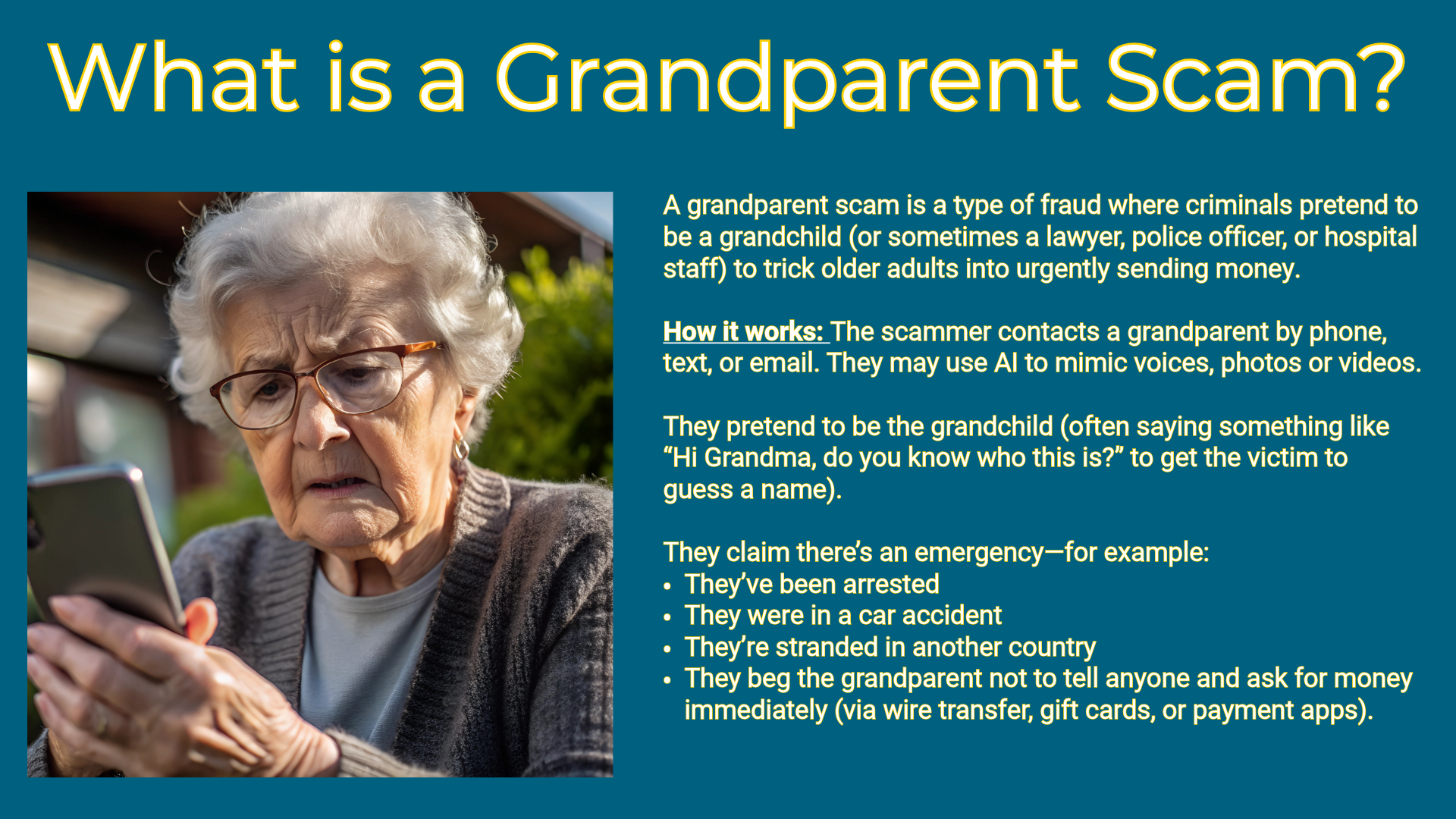
A grandparent scam is a type of fraud where criminals pretend to be a grandchild to trick older adults into urgently sending money.
How it works:
- The scammer contacts a grandparent by phone, text, or email.
- They pretend to be the grandchild (often saying something like “Hi Grandma, do you know who this is?” to get the victim to guess a name).
- They claim there’s an emergency — for example:
- They’ve been arrested
- They were in a car accident
- They’re stranded in another country
- They beg the grandparent not to tell anyone and ask for money immediately (via wire transfer, gift cards, or payment apps).
-
Sometimes, a scammer may pretend to be a lawyer, police officer, or hospital staff calling with the same urgent message about the grandchild.
Why it’s effective
- It plays on emotion and urgency, especially fear and love for family.
- Scammers may use information from social media to sound convincing.
- Scammers may use AI or voice modulators to mimic a loved one’s voice. They may also use AI to mimic photos or videos.
- Older adults may feel pressured to act quickly without verifying.
Warning signs
- Urgent request for money with a “don’t tell anyone” instruction
- Requests for payment via gift cards, wire transfers, or cryptocurrency
- Caller refuses to let you speak directly to the grandchild
- Story has inconsistencies or vague details
How to protect yourself
- Pause and verify: Call your grandchild (or their parents) directly using a known number.
- Ask a question only your real grandchild would know.
- Never send money under pressure.
- Talk to someone you trust before acting.
If someone is targeted: Report it to the Federal Trade Commission or your local police department.