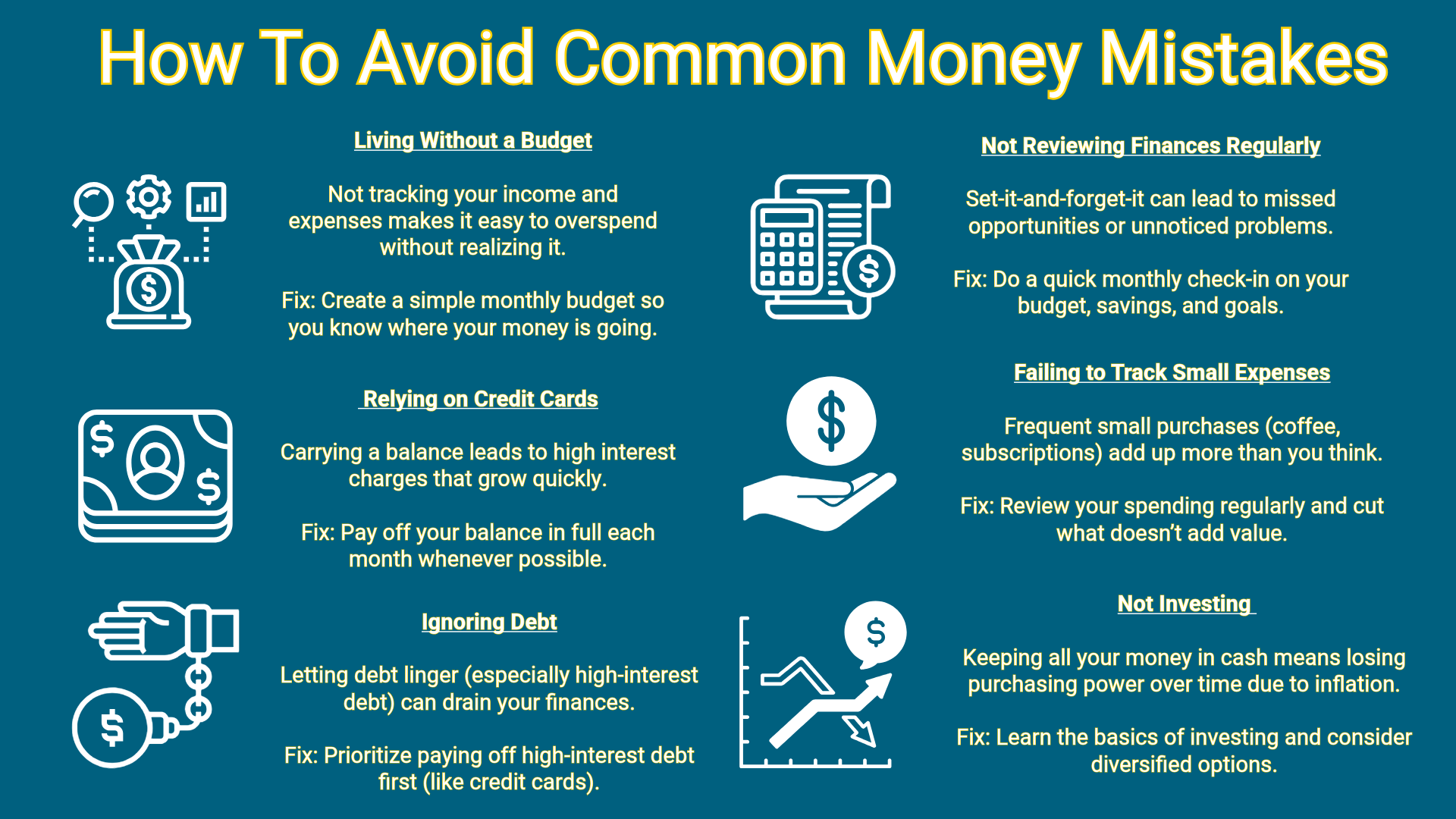
Avoiding a few common money mistakes can make a big difference over time. Here are some of the biggest ones—and what to do instead:
Living Without a Budget
Not tracking your income and expenses makes it easy to overspend without realizing it.
Fix: Create a simple monthly budget so you know where your money is going.
Ignoring an Emergency Fund
Unexpected expenses (car repairs, medical bills) can push you into debt if you’re unprepared.
Fix: Aim to save 3–6 months of essential expenses in a separate account.
Relying Too Much on Credit Cards
Carrying a balance leads to high interest charges that grow quickly.
Fix: Pay off your balance in full each month whenever possible.
Not Saving for Retirement Early
Delaying retirement savings means missing out on compound growth (Compound Interest).
Fix: Start early—even small contributions add up over time.
Lifestyle Inflation
As income increases, spending often rises just as fast.
Fix: Keep your expenses in check and increase savings when you earn more.
Not Setting Financial Goals
Without clear goals, it’s easy to drift and make impulsive decisions.
Fix: Set short-term (vacation, emergency fund) and long-term goals (home, retirement).
Ignoring Debt
Letting debt linger (especially high-interest debt) drain your finances.
Fix: Prioritize paying off high-interest debt first (like credit cards).
Not Investing
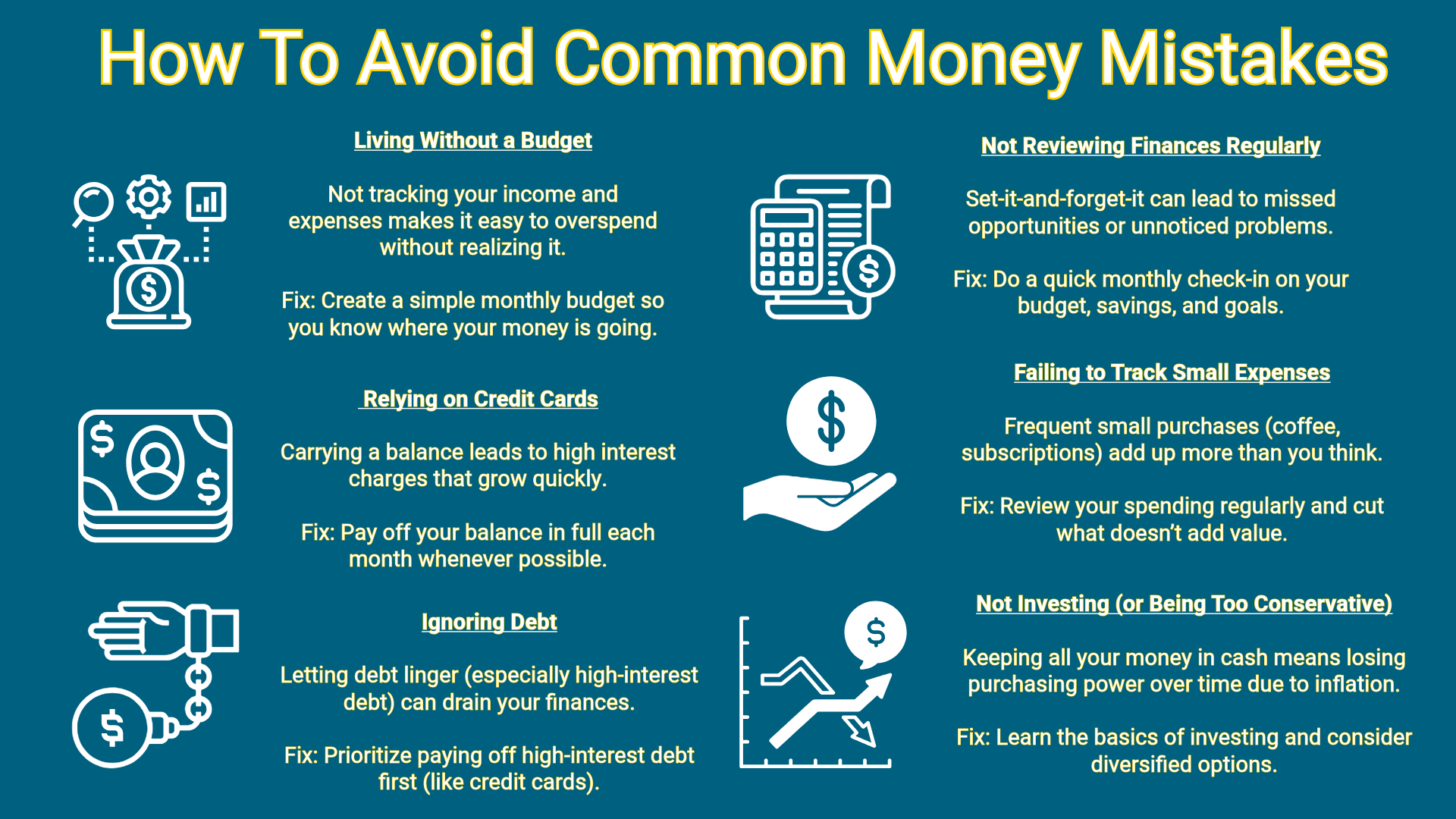
Keeping all your money in cash means losing purchasing power over time due to inflation.
Fix: Learn the basics of investing and consider diversified options.
Failing to Track Small Expenses
Frequent small purchases (coffee, subscriptions) add up more than you think.
Fix: Review your spending regularly and cut what doesn’t add value.
Not Reviewing Finances Regularly
Set-it-and-forget-it can lead to missed opportunities or unnoticed problems.
Fix: Do a quick monthly check-in on your budget, savings, and goals.