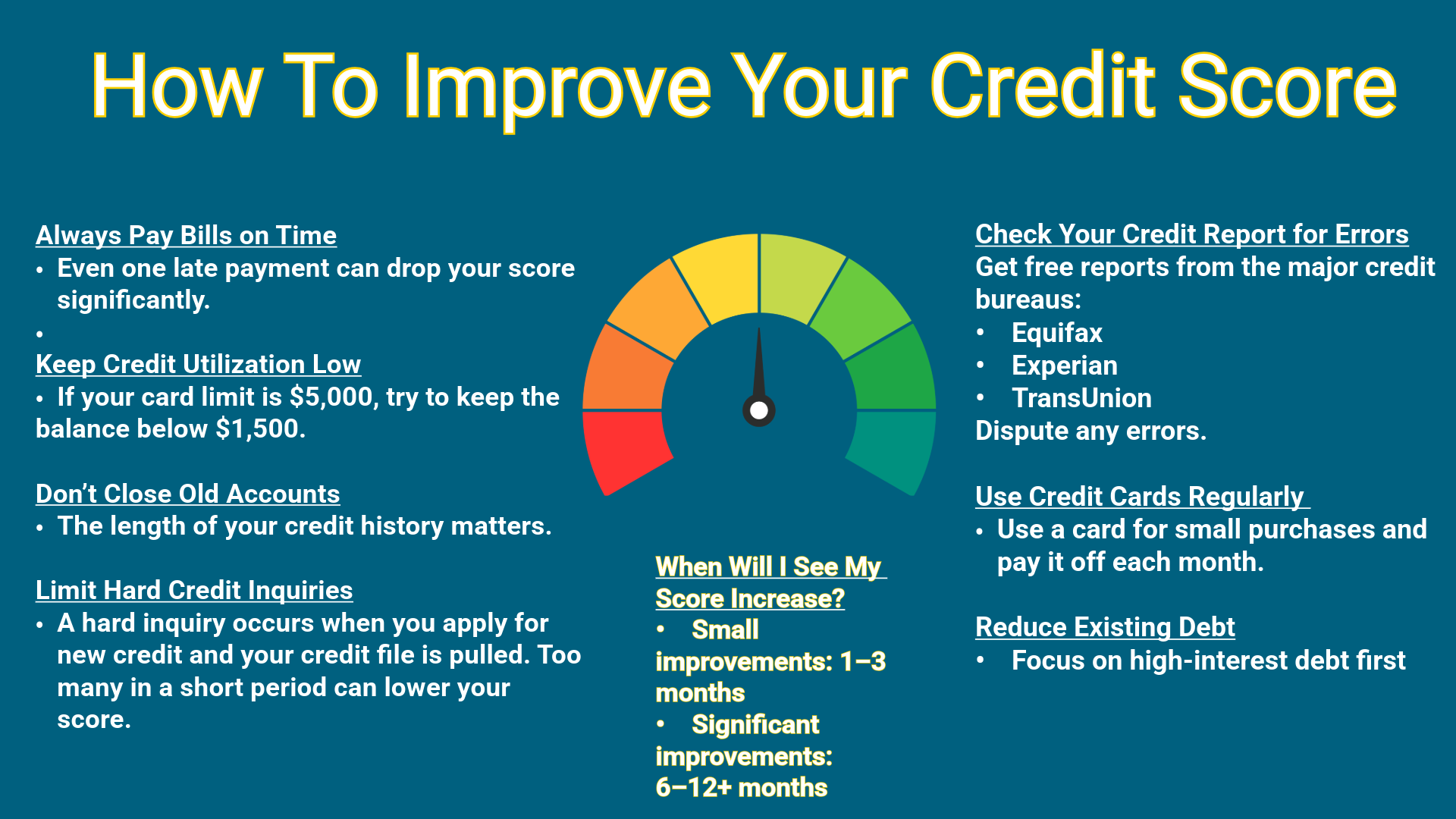
Improving your credit score mostly comes down to building a consistent history of responsible credit use. Credit scores such as the FICO Score (most widely used) and VantageScore use similar factors, so the same habits generally help across the board. Here are the most effective steps:
Always Pay Bills on Time
Payment history is the largest factor (about 35%) in many scoring models.
What to do:
- Pay credit cards, loans, utilities, and other bills on or before the due date.
- Set automatic payments or reminders to avoid missing one.
Even one late payment can drop your score significantly and stay on your report for years.
Keep Credit Utilization Low
Credit utilization = how much of your available credit you’re using.
Best practice:
- Stay under 30% of your limit.
- Ideally under 10% for the best scores.
Example:
If your card limit is $5,000 → try to keep the balance below $1,500 (or ideally under $500).
Don’t Close Old Accounts
The length of your credit history matters.
If you close an old card:
- Your average account age decreases
- Your available credit drops, which can increase utilization
Keeping old accounts open (even with small activity) helps.
Limit Hard Credit Inquiries
Applying for new credit triggers a hard inquiry. A hard inquiry occurs when you apply for new credit and your credit file is pulled. Too many in a short period can lower your score.
Try to space out applications.
Check Your Credit Report for Errors
Mistakes happen and can hurt your score.
You can get free reports from the major credit bureaus:
- Equifax
- Experian
- TransUnion
Dispute any incorrect accounts, balances, or late payments.
Reduce Existing Debt
Lower balances gradually.
Good strategy:
- Focus on high-interest debt first
- Keep making at least the minimum payments on everything
Use Credit Cards Regularly (But Lightly)
If you don’t use credit at all, it’s harder to build a score.
Use a card for small purchases and pay it off each month.
When Can I Expect a Higher Score?
- Small improvements: 1–3 months
- Significant improvements: 6–12+ months
Credit scoring rewards long-term consistency.