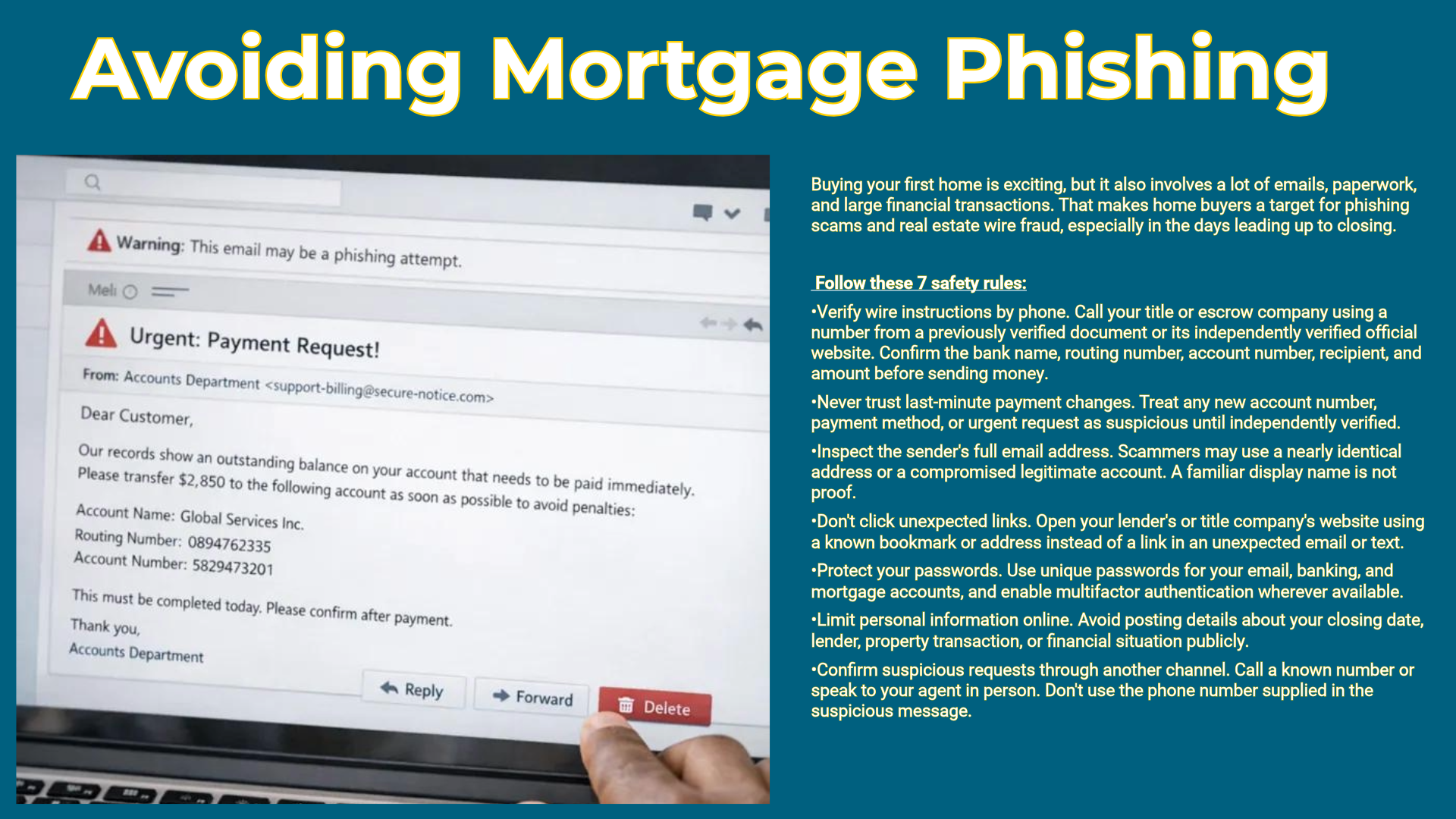
Buying your first home is exciting, but it also involves a lot of emails, paperwork, and large financial transactions. That makes home buyers a target for phishing scams and real estate wire fraud, especially in the days leading up to closing.
Know the most common scams
The most important rule is this: Never send a down payment or closing funds based solely on instructions received by email or text. Always verify payment instructions through a trusted phone number you already know is legitimate.
Fake wire transfer instructions
A scammer impersonates your title company, escrow agent, or real estate attorney and emails you new bank account details. If you wire your closing money to that account, recovering it can be difficult.
Fake wire transfer instructions
A scammer impersonates your title company, escrow agent, or real estate attorney and emails you new bank account details. If you wire your closing money to that account, recovering it can be difficult.
Fake emails from your real estate agent or lender
You receive a message asking you to click a link, open an attachment, update account information, or log in to a fake website.
Urgent texts or last-minute changes
Someone claims your closing is delayed, your mortgage approval is at risk, or you must pay a fee immediately to avoid losing the house.
Fake document-signing or identity verification links
A message that appears to come from your lender or title company asks for your password, Social Security number, bank login, or identity documents on an unfamiliar site.
Follow these 7 safety rules:
- Verify wire instructions by phone. Call your title or escrow company using a number from a previously verified document or its independently verified official website. Confirm the bank name, routing number, account number, recipient, and amount before sending money.
- Never trust last-minute payment changes. Treat any new account number, payment method, or urgent request as suspicious until independently verified.
- Inspect the sender's full email address. Scammers may use a nearly identical address or a compromised legitimate account. A familiar display name is not proof.
- Don't click unexpected links. Open your lender's or title company's website using a known bookmark or address instead of a link in an unexpected email or text.
- Protect your passwords. Use unique passwords for your email, banking, and mortgage accounts, and enable multifactor authentication wherever available.
- Limit personal information online. Avoid posting details about your closing date, lender, property transaction, or financial situation publicly.
-
Confirm suspicious requests through another channel. Call a known number or speak to your agent in person. Don't use the phone number supplied in the suspicious messages.
These precautions follow guidance from the FBI's Internet Crime Complaint Center on real estate-related wire fraud.
Create a closing-day safety checklist
Before you send your down payment:
- Save verified phone numbers for my real estate agent, lender, and title or escrow company.
- Confirm the exact payment instructions by phone before initiating the wire.